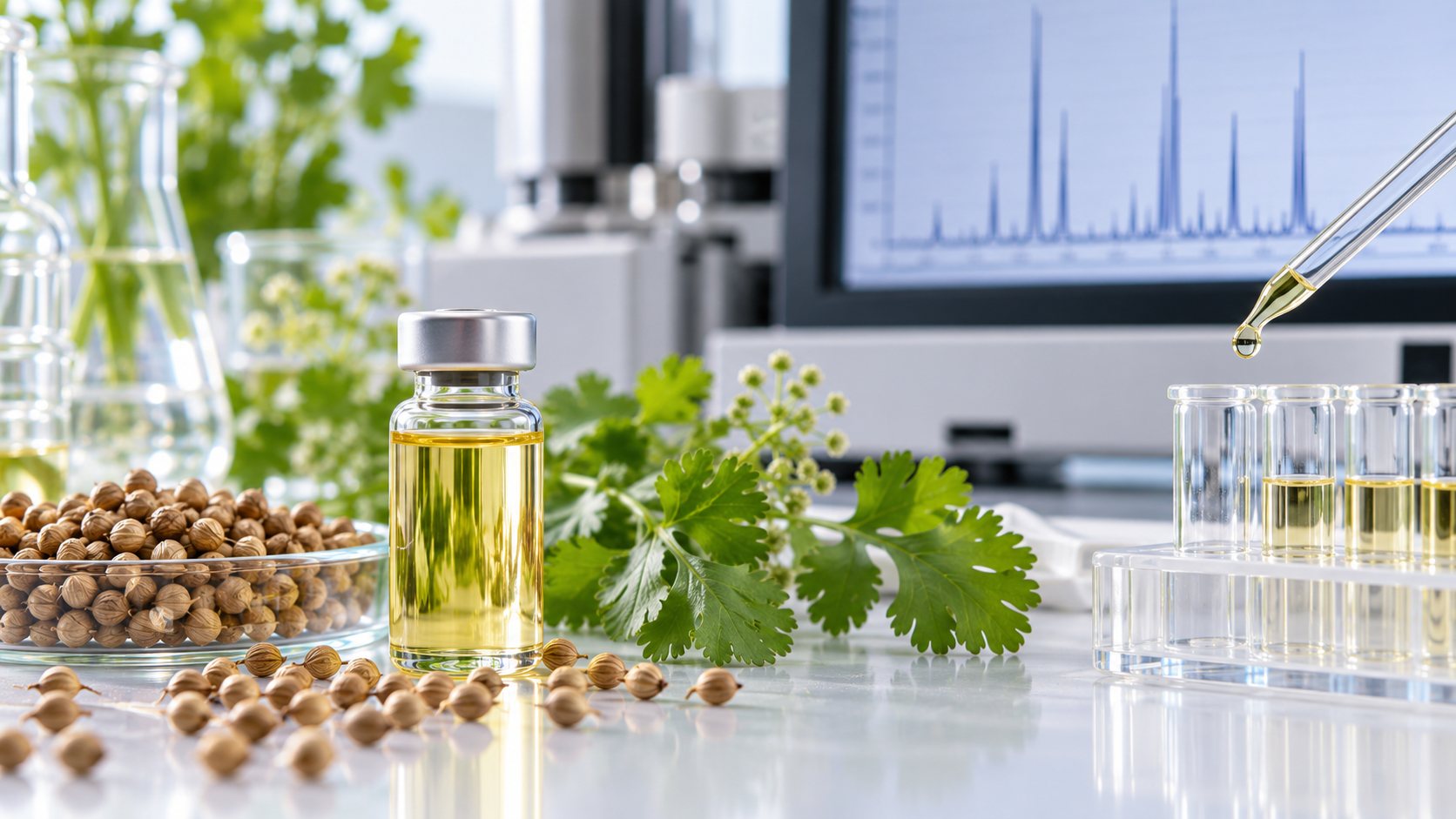
Interest in natural aromatic ingredients remains an important trend in the European food industry. Essential oils of coriander, dill, fennel, and other plants can be relevant for manufacturers of sauces, marinades, meat products, snacks, and flavour compositions.
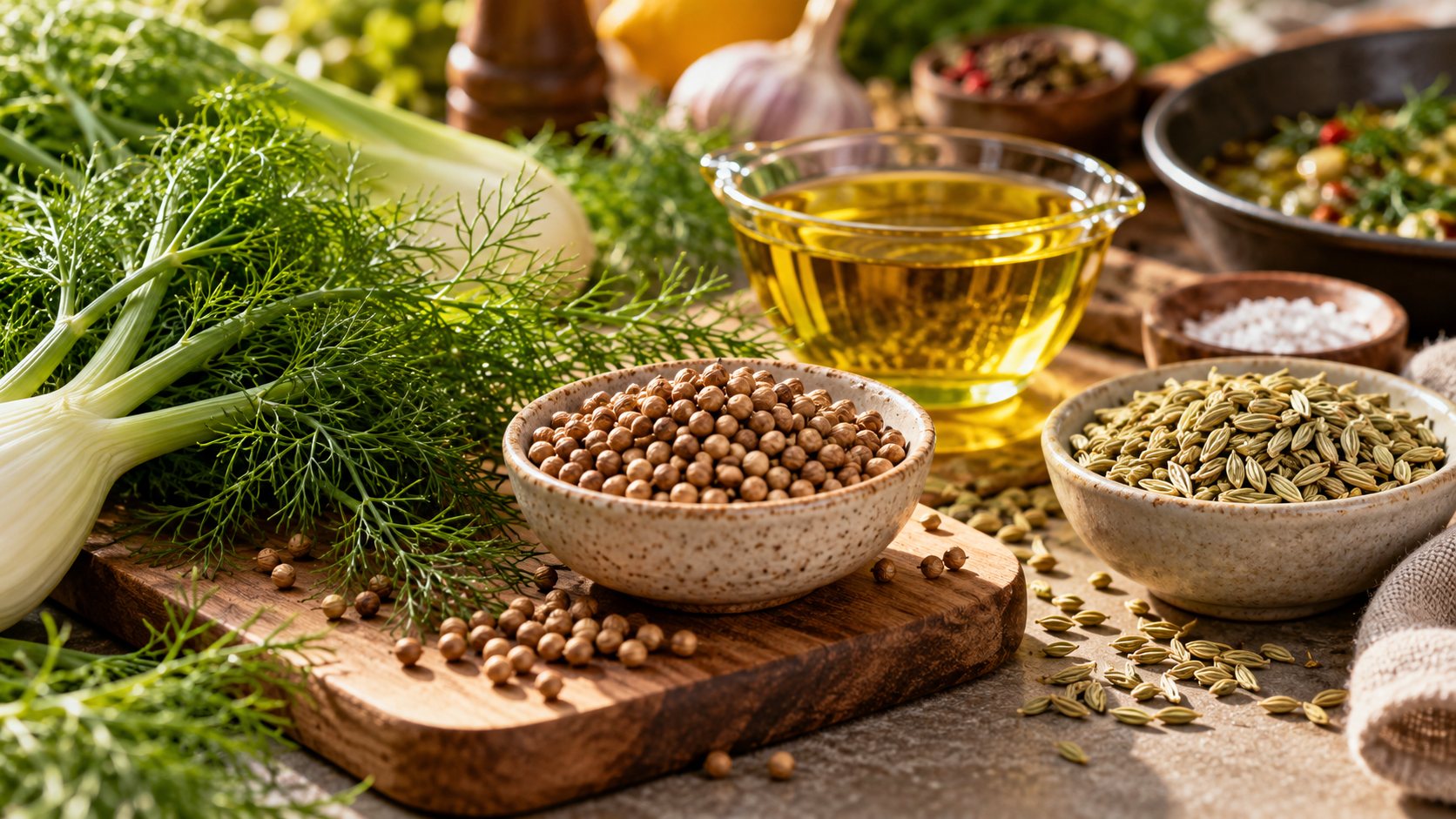
However, in the European market, the word “natural” is not simply a marketing description.
Europe Has Specific Rules for Flavourings
The use of flavourings and food ingredients with flavouring properties in the European Union is regulated by Regulation (EC) No 1334/2008.
The regulation sets requirements for the safety, classification, and labelling of flavourings and also establishes rules for the use of the term “natural”.
This is important both for manufacturers of finished food products and for suppliers of natural plant-based and aromatic raw materials.
Why the Origin of the Raw Material Matters
When selecting a natural ingredient, manufacturers need to understand where it comes from and how it was produced.
For essential oils, the following factors may be especially important:
- botanical species;
- part of the plant used;
- origin of the raw material;
- distillation or other production method;
- composition of the volatile fraction;
- intended application of the final product.
For example, essential oil obtained from coriander fruits can differ significantly in aroma from oil obtained from the aerial parts of the same plant.
The same applies to dill: oil produced from mature fruits and oil from the green parts of the plant are different aromatic ingredients with different chemical profiles.
Why Accurate Product Identification Matters in B2B
For a professional European buyer, the description “natural essential oil” is often not sufficient.
The more precisely the supplier describes the raw material, the easier it is for a formulator to assess whether it is suitable for a specific application.
A specification should clearly indicate the botanical name, plant part used, production method, and key characteristics of the product.
This reduces the risk of misunderstanding and makes the work of R&D, procurement, and quality teams more efficient.
Natural Does Not Automatically Mean Safe
Another important principle of European regulation is that natural origin alone does not guarantee that an ingredient is suitable for every use or concentration.
EU legislation establishes general safety requirements for flavourings, while some substances may be subject to additional conditions or restrictions.
This means that the use of a particular essential oil must always be assessed in relation to the intended product, formulation, dosage, and applicable legislation.
Opportunities for Plant-Based Ingredients
For suppliers of coriander, dill, fennel, and other essential-oil crops, the European food market offers opportunities beyond finished essential oils.
A single plant may provide several B2B products: spices, ground botanical raw materials, essential oils, hydrosols, and other plant-derived ingredients.
However, the deeper an ingredient is integrated into an industrial formulation, the greater the customer’s expectations regarding origin, specification, and supply consistency.
Conclusion
In the European market, “natural” is becoming more than an attractive product claim — it is part of a broader system of requirements related to origin and ingredient identification.
For B2B suppliers, the strongest approach is one in which natural plant-based raw materials are supported by clear product descriptions, consistent characteristics, and the documentation required by professional buyers.